Master Your Monthly Expenses with a Strategic Bill Payment Log Book
In an era where digital subscriptions multiply silently and utility rates fluctuate unpredictably, maintaining a clear overview of your financial obligations is more critical than ever. Many individuals rely on memory or scattered email notifications to manage their outgoing funds, a method that often leads to late fees, missed payments, and unnecessary stress. This is where a dedicated Bill Payment Log Book becomes an indispensable tool for personal finance management. It serves not just as a record-keeping mechanism, but as a central command center for your monthly cash flow, empowering you to take decisive control over your economic well-being.
The concept is deceptively simple yet profoundly effective. By physically or digitally tracking every invoice, due date, and payment status, you transform abstract financial anxiety into concrete, manageable data. Whether you are a freelancer managing irregular income, a family coordinating household expenses, or an individual striving to eliminate debt, the structured approach provided by a comprehensive log book creates a foundation for lasting financial success.
The Anatomy of Effective Financial Tracking
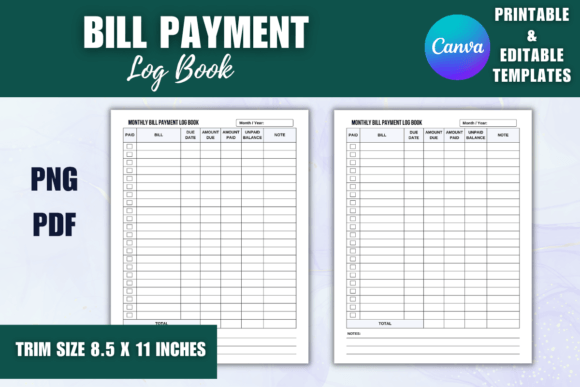
A high-quality Bill Payment Log Book is designed with specific functional elements that guide the user through the payment process systematically. It is not merely a blank notebook; it is a engineered workflow on paper. The interior layout typically features a robust Bill Payments Checklist, which acts as the primary interface between your financial responsibilities and your actions. This checklist ensures that no obligation slips through the cracks, providing a visual confirmation of completed tasks that triggers a sense of accomplishment and order.
Within each entry, several key data points are essential for accurate tracking. First, the Due Date is prominently featured, allowing you to prioritize payments based on urgency rather than whim. Next, the Amount Due column helps you anticipate the exact hit to your bank account, facilitating better budgeting and preventing overdrafts. Once the transaction is complete, recording the Amount Paid provides a historical record that can be invaluable for dispute resolution or tax preparation.
Perhaps the most insightful feature is the Unpaid Balance field. For those managing installment plans, credit cards, or utilities with variable rates, tracking what remains outstanding is crucial for understanding your true liability. Finally, a dedicated Note section offers flexibility. Here, you might record account numbers, customer service reference codes, or specific instructions for future payments. This level of detail transforms a simple list into a comprehensive financial diary.
Digital Flexibility Meets Tangible Organization
Modern users demand versatility, and the contemporary Bill Payment Log Book delivers by bridging the gap between traditional pen-and-paper methods and digital customization. When you acquire this resource, you are not limited to a static, pre-printed format. Instead, you receive a versatile package designed to fit your specific aesthetic and functional preferences. The product includes three distinct files to maximize utility:
- 1 PDF File containing a Canva template link: This is the gateway to full customization. It allows you to access the design in a user-friendly online editor.
- 1 PDF File containing ready-to-use templates: Ideal for those who prefer immediate printing without editing, offering a clean, professional layout right out of the box.
- 1 PNG File in 8.5 x 11 inches: A high-resolution image format suitable for various digital planning apps or direct printing needs.
This multi-format approach ensures that whether you are a tech-savvy digital planner enthusiast or someone who prefers the tactile satisfaction of writing on paper, the tool adapts to you. The inclusion of the Canva template link is particularly powerful. It democratizes design, allowing users with no graphic design experience to modify the log book to suit their brand colors, personal style, or specific organizational needs.
How It Works: A Seamless Integration into Your Routine
Integrating a new organizational tool should not add complexity to your life. The process of setting up and using this Bill Payment Log Book is streamlined for efficiency. Here is how the workflow unfolds:
- Download your file after purchase: Immediate access means you can start organizing your finances without delay.
- Click the link provided in the PDF: This directs you straight to the editable template in Canva, removing technical barriers.
- Create a free account with Canva or use your existing one: The platform is accessible and widely used, ensuring compatibility with most devices.
- Template Editing: Customize the color scheme to match your home office decor, adjust fonts for readability, or resize elements to fit your specific binder or planner size. This step ensures emotional connection to the tool, increasing the likelihood of consistent use.
- Download as PNG or PDF: Choose the format that best suits your printing or digital insertion needs.
- Print at home or by using a printing service: High-quality local printers or professional services can bring your customized log to life on premium paper stock.
It is important to note that the final appearance of the printed template may vary slightly depending on the printer used. Color calibration differs between home inkjet printers, laser printers, and professional commercial services. Therefore, it is advisable to print a test page to check alignment and color fidelity before committing to a full batch. This small step ensures that your Bill Payment Log Book looks as professional and polished as intended.
Why Manual Tracking Still Matters in a Digital World
One might ask, "Why use a log book when banking apps provide automatic transaction histories?" The answer lies in the difference between passive recording and active management. Banking apps show you what has happened; a bill payment log helps you plan what needs to happen. Automatic feeds often lag, categorize transactions incorrectly, or fail to distinguish between a pending charge and a cleared payment. Furthermore, they do not provide a holistic view of upcoming due dates in a single, glanceable format.
Using a physical or printable log engages the cognitive process of writing, which has been shown to improve memory retention and commitment. When you physically check off a bill in your Bill Payments Checklist, you reinforce the action. This tactile engagement creates a psychological closure that digital clicks often lack. It transforms bill paying from a chore into a ritual of financial stewardship.
Additionally, a log book provides a centralized location for all billing information. Instead of searching through emails for account numbers or logging into five different provider websites to check due dates, everything is consolidated on one page. This efficiency saves time and reduces the mental load associated with administrative tasks. For households, this centralization is even more valuable, allowing partners to share responsibility and visibility over shared expenses without constant communication overhead.
Strategic Benefits for Long-Term Financial Health
Beyond immediate organization, the consistent use of a Bill Payment Log Book fosters long-term financial health. By regularly reviewing your Unpaid Balance and Amount Paid columns, you begin to spot patterns. You might notice that your utility bills spike in certain months, prompting you to budget more aggressively during those periods. You might identify recurring subscriptions that are no longer useful, leading to immediate cost savings. This data-driven awareness is the first step toward optimizing your expenditure.
Moreover, maintaining a flawless payment history is crucial for your credit score. Late payments can have a detrimental impact on your creditworthiness, affecting your ability to secure loans, mortgages, or favorable interest rates in the future. A reliable log system acts as a safeguard against these oversights, ensuring that every payment is made on time, every time. This consistency builds a strong financial reputation, opening doors to greater economic opportunities.
In essence, this tool is more than just a collection of pages; it is a catalyst for financial empowerment. It shifts the dynamic from reacting to bills as they arrive to proactively managing your financial landscape. By taking control of the details, you free up mental energy to focus on broader financial goals, such as saving, investing, and wealth building. The Bill Payment Log Book is a small investment with potentially massive returns in peace of mind and financial stability.